

Can small square tiles make our bathroom unique? Definitely yes. Ceramic mosaic has been very popular for years and is used not only in home bathrooms. See what her secret is and learn proven ways for professional laying.
Types of mosaic
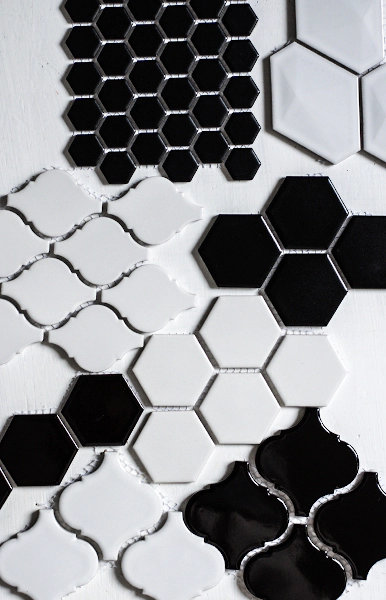
In stores you will find various types of mosaic: ceramic, glass, stone, and even wooden or metal. The most commonly used is ceramic mosaic. To make its laying not so time-consuming, manufacturers have combined small elements with a special mesh and thus created ready-made blocks, available in various sizes. Thanks to this, the installation of the mosaic is much simpler, because we no longer have to worry about each square tile being evenly set. Simply put, some of the work has already been done for us. These sheets can be easily adapted to various types of substrates, modeling and cutting them in any way.

Ceramic mosaic – why is it worth it?
In addition to the fact that the mosaic looks incredibly effective, its application has a very practical dimension. Why? Because thanks to it, we can easily finish so-called difficult places, without the need for laborious cutting and modeling of traditional tiles. Mosaic will therefore be perfect for rounded and convex surfaces, such as: an oval bathtub surround, a washbasin countertop or the finish of a round mirror.
How to lay mosaic
Before we start laying the mosaic, let's precisely determine our concept and the arrangement of the tiles. We must remember that the mosaic is a decorative element that should subtly stand out against a uniform background. In addition, using mosaic in too many places can introduce unnecessary chaos and spoil the final effect of the project.

Take care of an even substrate and precision of workmanship
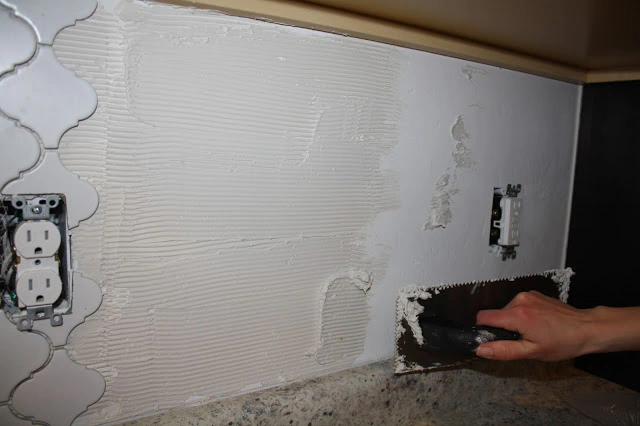
Before laying the mosaic, we must level the substrate very carefully. The next step is to spread a thin layer of adhesive mortar. To perform this operation precisely, we should use a trowel with the finest teeth. Remember, if the adhesive layer is too thick, it is very likely that it will leak out of the gaps. Spread the adhesive on smaller surfaces so that it does not dry before the tiles are attached. The mosaic fragments must be laid evenly and with great accuracy. We must remember to maintain an appropriate distance between the meshes so that the joints have the same width. Spacer crosses will be extremely helpful in this operation. A spirit level will also be useful, thanks to which we will be able to measure the vertical and horizontal. During grouting, flexible or epoxy grouts, which are resistant to dirt, UV radiation or fungi and unwanted efflorescence, will be perfect. When we have already laid our composition and corrected the width of the joints, it is worth fixing the entire structure, gently and with great care, pressing it against the surface with a styrofoam or rubber trowel or other tool. To finish our work after the mosaic has dried, just wipe it with a damp cloth. Then we can only enjoy the effect we have achieved.
See our bathroom tiles.


