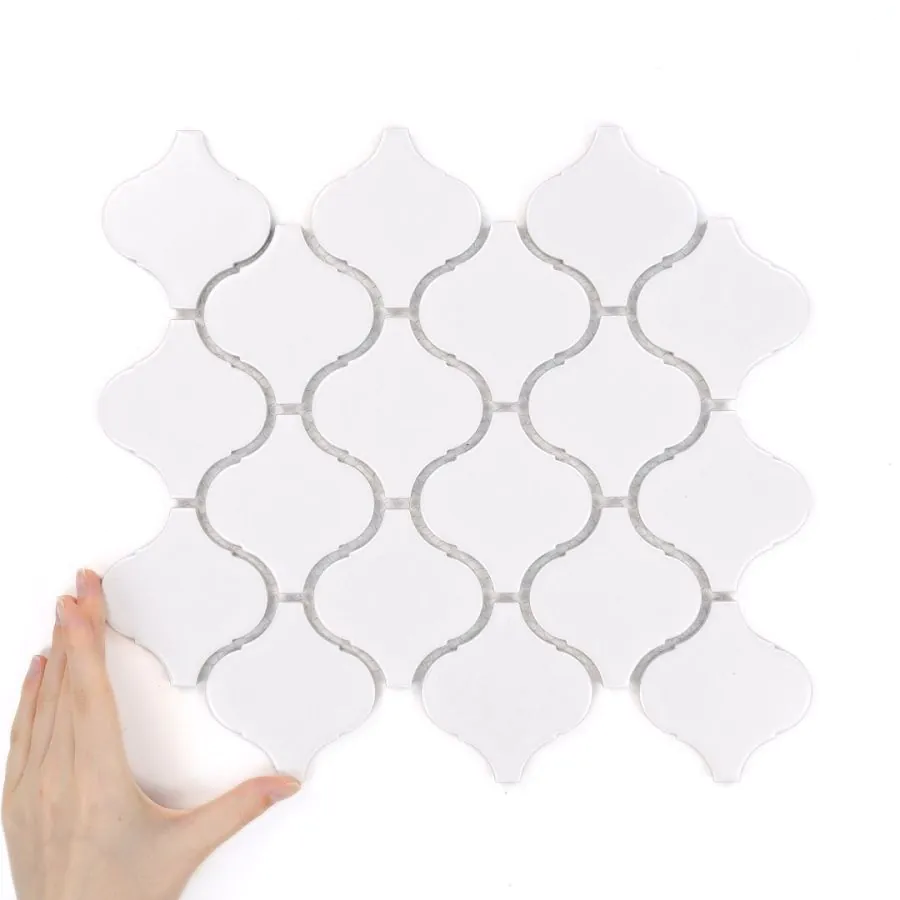


Choosing Grout for Mosaic - 5 Tips from Specialists!
Ceramic mosaic allows introducing intriguing shapes, patterns, colors into the interior. However, to maximize its beauty and enhance its charm, the choice of grout must be approached with extreme caution! What to grout mosaics with? How much grout for mosaics? How to apply grout to mosaics? Together with experts from the tiling industry, we have prepared five practical tips that will save you from a grout disaster! Let's start!


Grout for mosaics: what it is and what its role is?
For many years, grout was perceived as a necessary accessory, today it is a full-fledged interior design element! In fact! It often dictates the final effect of the entire arrangement! It sets the tone, shapes the style! In reality, it fulfills a range of important functions – from decorative and protective to finishing! Designers approach it extremely seriously, combining functionality with aesthetic qualities!
Alright, but what exactly do we call grout? What is its definition? Grout is a composite material usually consisting of two or three elements. It is typically used for grouting ceramic and stone tiles – both wall and floor tiles. In the past, mainly lime mortar was used for its production, today the availability of raw materials is much greater.
Grout for mosaics as a decorative element
Pictures, posters, graphics?! These are certainly the first things that come to mind when you think about interior decoration. Unfortunately, in the kitchen or bathroom, they may prove completely impractical! These are rooms with very specific conditions – increased humidity, temperature. Fortunately, mosaics feel great in them! However, for them to serve as a decoration, the right grout must be chosen! The right one, meaning what kind?
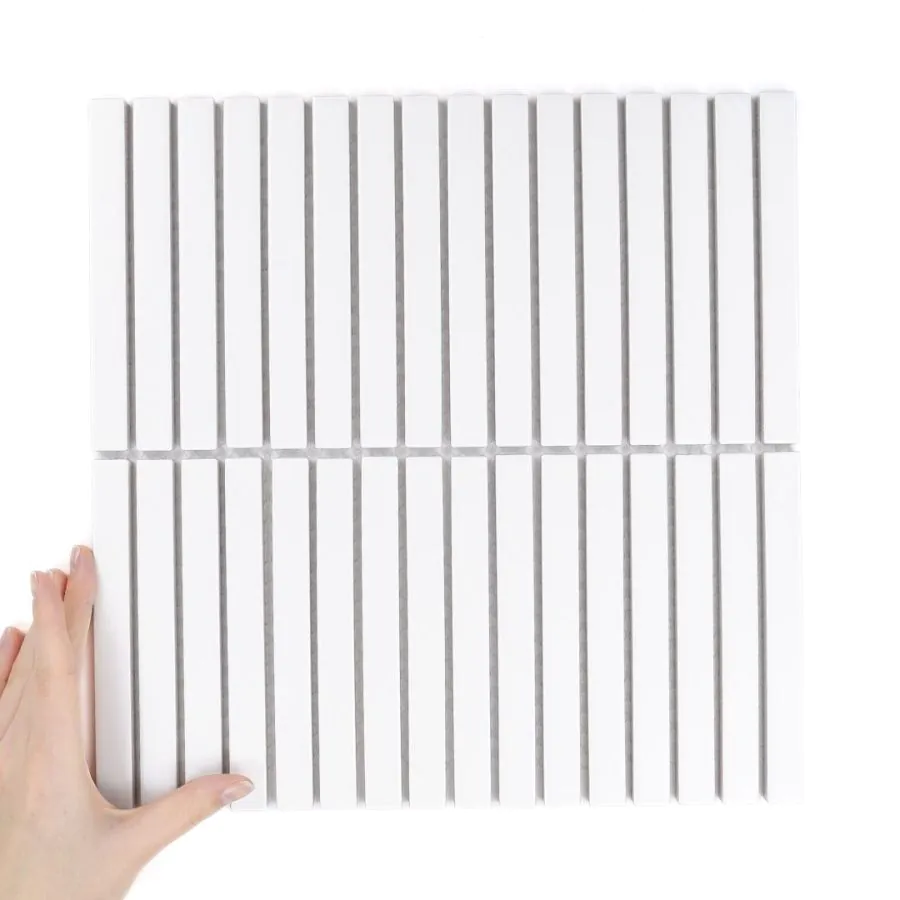
Much depends on our individual vision, the character of the tiles, and the room itself. Matching grout or quite the opposite – contrasting? Black combined with white mosaic will make it more visible. Conversely, a grout in a shade as close as possible to the tile color will be a natural, subtle complement.
Grout for mosaics and its protective function
Beyond its purely decorative role, grout protects against the harmful effects of moisture and the growth of fungi. Moreover, it prevents dirt, dust, and mold from getting in! This is extremely important, especially in the bathroom, where air circulation is generally very limited. The same applies to kitchens without windows. Furthermore, it prevents loosening, cracking, and washing out of mortar and adhesive – it keeps the tiles in check.
Grout for mosaics as a finishing element
Grout is a very important finishing element! Laying without joints is a myth! It can result in serious consequences! Mosaic, just like classic tiles, is characterized by so-called thermal expansion – under the influence of high temperatures, it can change its dimensions – expand or contract!
Expansion joints, even those of 1-2 mm, effectively prevent the negative effects of this phenomenon. They allow for easy replacement of individual mosaic elements. Of course, provided they are filled with the appropriate material!
Suggested Products
Choosing Grout for Mosaic – Five Tips from Specialists!
What to grout mosaics with? How much grout for mosaics? How to apply grout to mosaics? For the grout to be tailored, a number of different factors must be taken into account, about which most of us have no idea! First: the type of binder, or simply put, the composition. Second: intended use. Third: color. Fourth: width. Fifth: ease of cleaning.


1. What type of grout to choose?
Cement, acrylic, epoxy? What to grout mosaics with? It's actually difficult to give a definitive answer. Each has its pros and cons, let's briefly review them. Then it will be much easier for us to choose a potential favorite!
Cement Grout
Relatively inexpensive, available in many colors, easy to install. Cement grout is undoubtedly one of the most common choices for mosaics. The question is, is it the right one? As the name suggests, the basic ingredient is cement, which unfortunately is not among the most durable. It gets dirty easily, cracks, and often requires complete replacement!
Acrylic Grout
Acrylic grout is sold in the form of a ready-to-use paste, so there is no need to dilute it with water beforehand. It is used in areas where there is a relatively high risk of tension – in corners, at the junction points of the floor and wall. Unfortunately, it does not tolerate prolonged contact with water well!
Epoxy Grout
Epoxy grout is definitely the most durable and functional solution. It can be successfully used for grouting mosaics in the bathroom and kitchen. It copes very well with moisture and dirt. It comes in many colors! Unfortunately, grouting with it is quite difficult, requiring great skill and care – it dries much faster than traditional grout!
Raw Decor Tiler's Tip!
Cement or epoxy? Are you debating? Don't know which grout to choose? You can go for a mix – a cement-resin grout!
2. How to choose the grout color for mosaic?
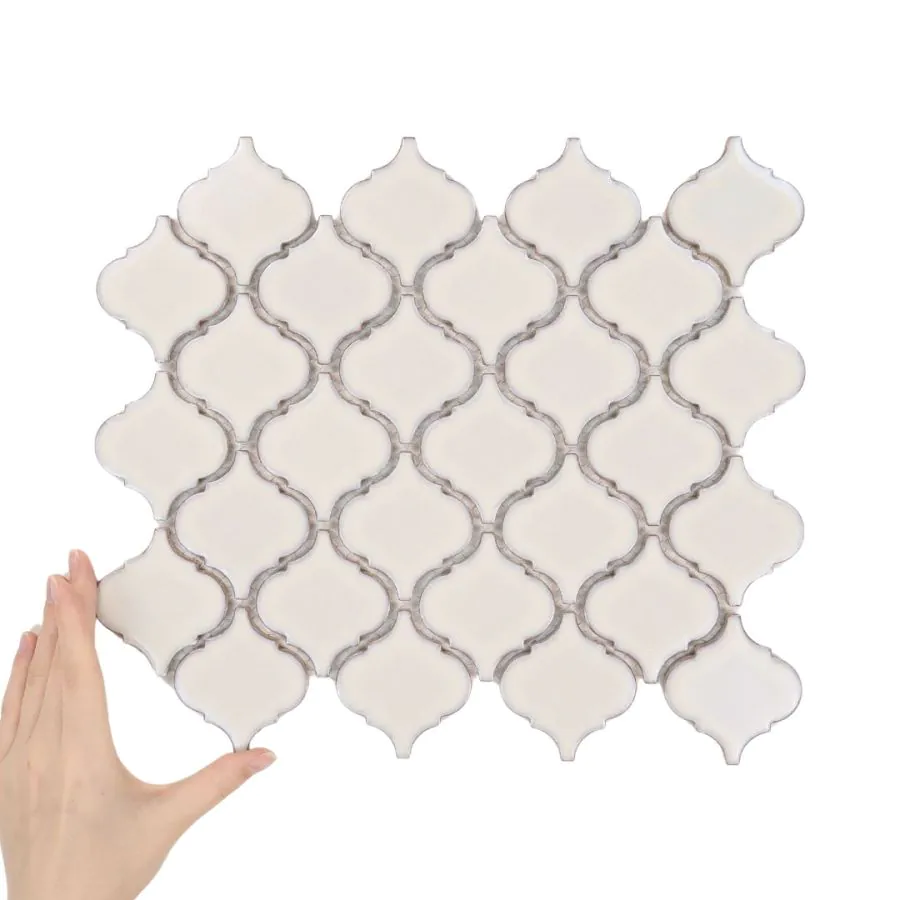
How to choose the grout color for mosaic? What should guide you? Primarily individual preferences! If you dream of a harmonious, minimalist interior where everything perfectly matches, go for a shade as close as possible to the mosaic color. The exception to this rule is white, which is best to stay away from! Every spot is visible on it, and it is prone to yellowing. A light gray grout is definitely a safer and more practical choice.
If, on the other hand, you lean towards a sophisticated aesthetic, seasoned with a touch of madness, opt for strong, distinct colors that contrast with the mosaic, which will wonderfully emphasize both the laying pattern and the tile shape. This solution is gaining popularity and is particularly favored in modern, retro, and vintage styles.
3. What grout to choose for the kitchen, and what for the bathroom?
The kitchen is a room where conditions are slightly different than in other parts of the apartment or house. The same can be said for the bathroom. High humidity, variable temperature, greater risk of stains and dirt?! Cement grout may not handle this! Epoxy, on the other hand, will remain unaffected! Epoxy grout, also called resin grout, is waterproof, stain-resistant, extremely easy to clean, and naturally pleasing to the eye. It does not lose color and does not discolor!
4. Wide or narrow grout? How to match the grout size to the mosaic?
Currently, there is a trend for 1-1.5 mm joints, and while we can certainly afford them with small mosaics, with large ones, many dangers lurk. The risk of the tiles completely falling off is really significant! To protect yourself from this, it's worth following these rules! We use 2-millimeter grouts for 10 × 10 tiles, medium (3-5 mm) for 20 × 20 ceramics, large (6-10 mm) for really substantial tiles - 30 × 30, 40 × 40, 60 × 60.
5. Easy-to-clean grout – which one to choose?
Probably most of us don't particularly enjoy housework, especially cleaning grout lines! The most problematic grout to keep clean is white cement grout, which absorbs dirt like a sponge! It yellows, crumbles – thus contributing to the formation of unsightly gaps! To save time and energy, it is worth choosing epoxy – a material characterized by high resistance and durability. Greasy stains or dirt are not a problem for it. The action of strong chemical agents!
Example combinations. Get inspired with Raw Decor!
Mosaic opens up a multitude of arrangement possibilities for us. However, it needs a special setting – grout! We have chosen three color variants as inspiration for creating an aesthetic and at the same time extremely functional interior!
White brick with black grout
The combination of white and black is an interior design hit! Although somewhat forgotten recently?! Fortunately, it's now unassumingly making a comeback! And it turns out it still offers infinite possibilities! White hexagons with black grout, or maybe mini brick?! What are the advantages of this combination? Style, class, timelessness!
Glitter grout, an unexpected detail!
An extremely interesting effect can be achieved by using grout with glitter! Sparkling particles will add charm to both elegant and modern arrangements. And as if that weren't enough, they will shape the space! It pairs perfectly with glass, ceramic, and metallic mosaics. The Constellation collection is practically made for it!
Gray grout as a way for white tiles!
Pearl gray epoxy grout creates many arrangement possibilities! It is particularly favored in interiors maintained in the Scandinavian, minimalist, Japandi aesthetic. It perfectly complements white and pastel mosaics! It is an ideal starting point for achieving the effect of a wonderfully light space!
Choosing Grout for Mosaic – Five Tips from Specialists! Summary
Which grout for mosaic will be the best? What to grout mosaics with? How to grout mosaics? This seemingly inconspicuous finishing material can cause many problems. It raises questions that are not so easy to answer. There are many possibilities, as the grout can be cement, acrylic, or epoxy. It can take on various colors! Fortunately, you have us! Raw Decor employees will gladly help and advise! They will dispel any doubts!